
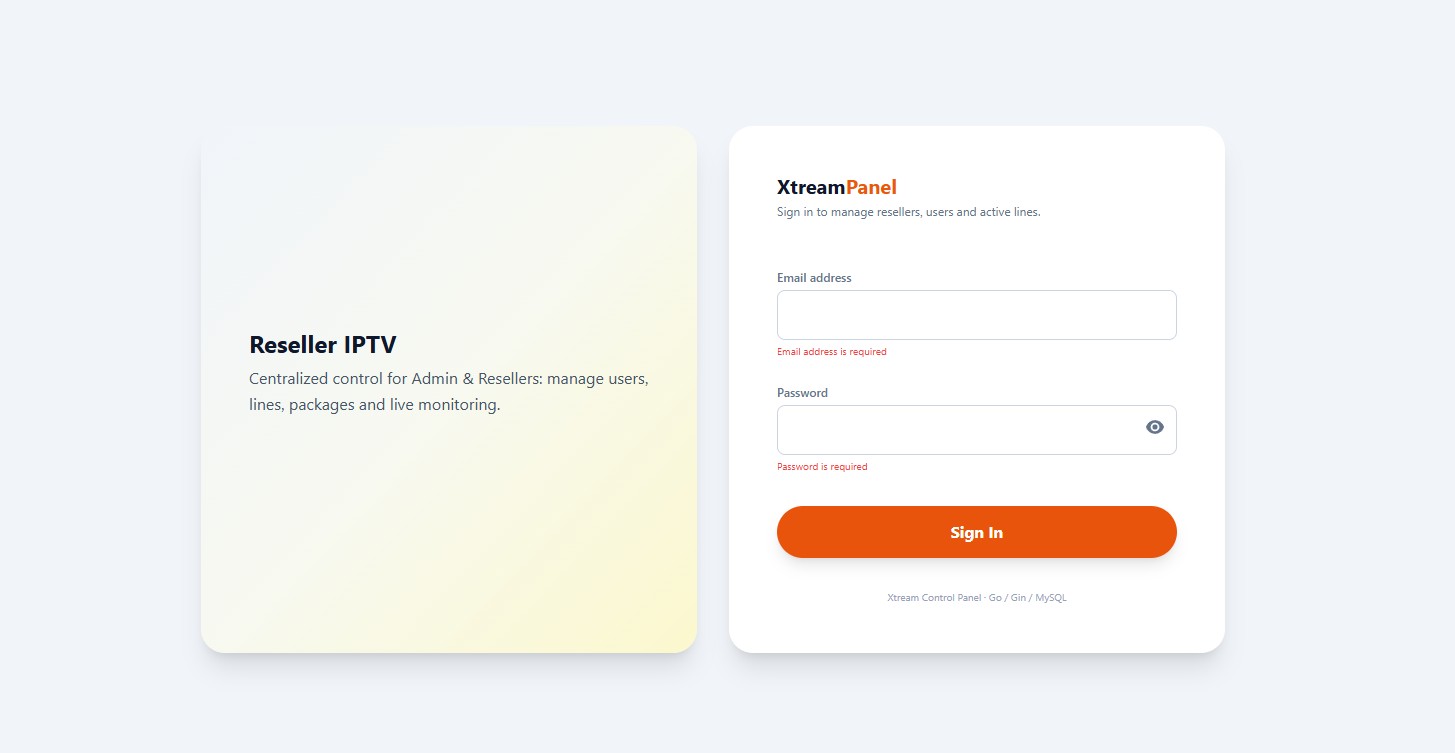
Project overview
Screen Craft Solutions was approached by a leading content distributor looking to replace an outdated, fragmented set of tools that managed live streams, channel line‑ups, and user access across multiple smart‑TV platforms. The goal was to deliver a single, modern IPTV panel that would centralise control, streamline operations, and provide a consistent experience for broadcasters and their audiences.
The challenge
The existing workflow relied on a mix of legacy scripts, manual spreadsheet updates, and separate web portals for each device family. This created data silos, inconsistent channel metadata, and a high risk of errors when publishing new content. Broadcasters needed a solution that could:
- ✓Provide real‑time updates for live events.
- ✓Support a growing catalogue of channels and on‑demand titles.
- ✓Offer granular user permissions and secure authentication.
- ✓Scale to accommodate peak viewing periods without manual intervention.
Product strategy
Our approach focused on three pillars: modular architecture, developer‑friendly APIs, and a responsive user interface. We chose a micro‑services stack that would allow independent scaling of core functions such as streaming ingestion, catalog management, and analytics. The front‑end was built with React to deliver a fast, accessible experience on web browsers and smart‑TV browsers alike.
Experience and key capabilities
Screen Craft Solutions brings a decade of experience in building custom media platforms. Our team has delivered:
- ✓Live‑streaming dashboards for broadcasters.
- ✓Enterprise‑grade ERP integrations for media workflows.
- ✓Real‑time analytics dashboards for audience insights.
These capabilities informed the design of the IPTV panel, ensuring it met the operational needs of modern broadcasters.
Technology and delivery
The solution was assembled using the following stack:
- ✓Node.js for the back‑end micro‑services.
- ✓React for the front‑end, with a component library that supports dark mode and responsive layouts.
- ✓Docker containers orchestrated by Kubernetes on AWS for high availability.
- ✓RESTful APIs and WebSocket channels for real‑time communication.
- ✓OAuth2 and JWT for secure authentication and role‑based access control.
- ✓CI/CD pipelines powered by GitHub Actions to automate testing, building, and deployment.
Testing followed a layered approach: unit tests for individual functions, integration tests for service interactions, and end‑to‑end tests that simulated user flows on web and Android TV browsers. Documentation was produced in Markdown and hosted on a self‑contained portal for internal and external stakeholders.
Outcome
The new IPTV panel unified the broadcaster’s control plane, eliminating manual spreadsheet updates and reducing the time required to publish a new channel. The micro‑services architecture allowed the platform to scale automatically during high‑traffic events, ensuring uninterrupted service. Broadcasters now have a single source of truth for channel metadata, scheduling, and user permissions.
What was delivered
Key deliverables included:
- ✓A fully functional web dashboard for channel management.
- ✓Responsive interfaces for Android TV and web browsers.
- ✓Secure authentication and granular role‑based access.
- ✓Real‑time live‑stream monitoring and analytics.
- ✓Automated deployment pipelines and comprehensive documentation.
These components collectively form a modern, scalable IPTV platform that empowers broadcasters to focus on content rather than infrastructure.